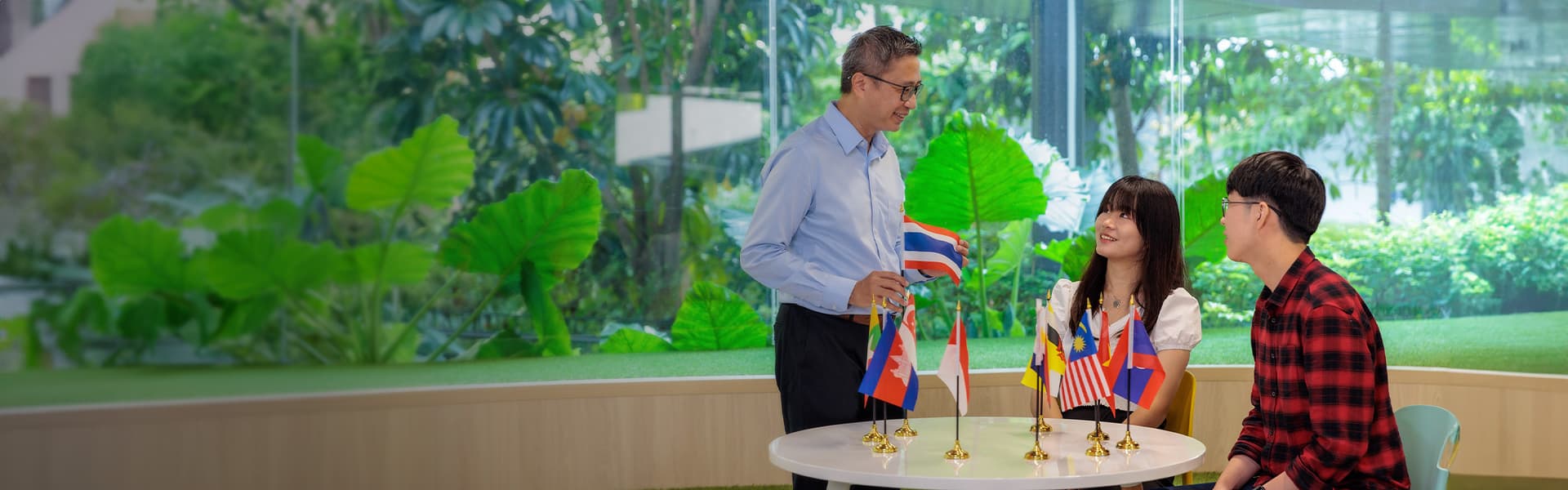
Future-Ready TVET Education: Innovative Pedagogy, AI and Educational Technology
A. Programme Synopsis
This one-day professional development programme offered by Ngee Ann Polytechnic provides vocational educators, academic leaders, and institutional managers with an overview of how Ngee Ann Polytechnic prepares learners for the rapidly evolving world of work through innovative pedagogy, artificial intelligence (AI), and educational technology. Designed specifically for Technical and Vocational Education and Training (TVET) institutions, the programme showcases how learner-centred teaching, industry collaboration, competency-based education, and digital innovation are integrated to enhance student engagement, learning outcomes, and graduate employability. 
Participants will explore contemporary pedagogical approaches including active learning, service learning, project-based learning, design thinking, collaborative learning, flipped classroom strategies, authentic assessment, work-integrated learning, and competency-based education. The programme will also demonstrate how AI and educational technologies are transforming teaching practice through AI-assisted lesson planning, content creation, virtual and simulation-based learning, learning management systems, and learning analytics.
Beyond classroom innovation, participants will gain insights into Ngee Ann Polytechnic's approach to curriculum co-development with industry, lifelong learning through micro-credentials and continuing education, and assessment strategies that promote academic integrity in the age of generative AI. A guided learning journey through selected teaching and innovation facilities will provide first-hand exposure to authentic learning environments and the technologies that support future-ready education.
By the end of the programme, participants will gain practical ideas, institutional strategies, and international best practices that can be adapted to strengthen teaching, learning, and curriculum innovation within their own TVET institutions.
B. Learning Objective
Examine how innovative pedagogy, artificial intelligence, educational technology, and industry collaboration can transform teaching and learning in Technical and Vocational Education and Training (TVET).
The programme comprises of the following 5 sub-themes:
- Transforming TVET Education for the Future
- Innovative Pedagogies for Active Learning
- AI and Educational Technology for Future-Ready Teaching
- Lifelong Learning and Curriculum Innovation
- Learning Journey
C. Teaching & Learning Strategies
C1. Pedagogical Approach
The programme adopts an experiential and immersive learning approach grounded in adult learning principles and professional development best practices. The learning design reflects the very pedagogical innovations being taught, providing participants with first-hand experience of learner-centred, technology-enhanced, and practice-based education.
The programme is structured around four interconnected pillars that position Ngee Ann Polytechnic as a benchmark institution for future-ready TVET education:
- C1.1 Future-Ready Pedagogy
Student-centred learning, competency-based education, active and experiential learning, authentic assessment - C1.2 AI-Enabled Teaching
AI lesson planning, content generation, assessment support, responsible AI use - C1.3 Educational Innovation
Smart classrooms, simulation-based learning, learning analytics, digital ecosystems - C1.4 TVET Leadership
Industry co-developed curricula, work-integrated learning, continuing education, lifelong learning ecosystem
C2. Teaching Strategies
C2.1 Learner-Centred Engagement
The programme honours participants' professional expertise by:
- Facilitating knowledge exchange among international TVET practitioners
- Encouraging critical evaluation of NP practices for adaptation to diverse contexts
- Providing opportunities for peer interaction and networking throughout the day
- Structuring reflection activities to connect learning to institutional challenges
C2.2 Demonstration and Modelling
Rather than theoretical instruction alone, the programme provides:
- Live demonstrations of innovative teaching practices by NP faculty
- Showcases of educational technologies and AI tools in authentic teaching contexts
- Site visits to learning environments where pedagogy and technology converge
- Panel discussions with educators who have implemented educational transformation
C3. Contextualised Learning
The programme grounds all content in:
- Real-world TVET contexts and challenges facing vocational educators globally
- Singapore's national approach to skills development and lifelong learning through SkillsFuture
- Industry-education partnerships that strengthen curriculum relevance
- Case studies of NP's curriculum innovation and assessment practices
C4. Technology-Enhanced Facilitation
The programme models effective use of educational technology through:
- Demonstrations of NP's Learning Management System (Brightspace)
- Showcases of AI-assisted teaching tools and their pedagogical applications
- Exposure to virtual and simulation-based learning environments
- Learning analytics dashboards that monitor engagement and performance
C5. 3As Framework Integration
The programme applies Ngee Ann Polytechnic's 3As Framework for AI Integration to model responsible AI adoption :
C5.1 ANCHOR (Core Professional Foundations) :
Core pedagogical expertise and instructional design principles independent of technology
- Foundational understanding of learner-centred education and competency-based frameworks
- Professional judgment in curriculum design and assessment strategy
- Human qualities of educational leadership and institutional transformation capability
C5.2 AUGMENT (AI to Enhance Effectiveness):
- Using AI tools for lesson planning, content creation, and assessment design
- Applying learning analytics to monitor learner engagement and inform teaching decisions
- Integrating AI responsibly into teaching workflows while maintaining pedagogical integrity
- Leveraging educational technologies to enhance efficiency and effectiveness
C5.3 ADVANCE (AI to Innovate and Transform):
- Designing AI-enabled learning experiences that transform educational practice
- Reimagining curriculum and assessment for the AI era while maintaining academic integrity
- Creating institutional strategies for responsible AI adoption across teaching and learning
- Innovating lifelong learning pathways through micro-credentials and flexible delivery
D. Constructive Alignment
The programme demonstrates constructive alignment between outcomes, activities, and reflection by ensuring:
- Each session directly addresses specific learning outcomes through targeted activities
- Learning activities progress from exposure (observe) to reflection (analyse) to application (plan)
- The learning journey provides concrete evidence of theoretical concepts in practice
- Closing reflection consolidates learning and prompts action planning for institutional contexts
E. Professional Learning Culture
The programme fosters a professional learning community among international TVET practitioners through:
- Structured networking opportunities during breaks and meals
- Peer exchange during discussions and Q&A sessions
- Engagement with NP faculty members across different disciplines
- Post-programme connection opportunities for continued collaboration
This approach ensures participants not only gain knowledge of NP's practices but also develop the critical capacity to evaluate, adapt, and implement innovations within their own institutional contexts, thereby strengthening the global TVET community of practice.
In conclusion, this programme presents a coherent narrative: how a leading polytechnic transforms teaching, curriculum, technology, and industry partnerships to develop future-ready graduates. It is well suited for delegations from ministries, polytechnics, and vocational institutions seeking practical, institution-wide models of educational excellence.
Connect with Us!
Other than this, NP Global offers many other programmes. Connect with us now to find out more about our services.
面向未来的职业技术教育:创新教学法、人工智能与教育科技
A. 课程简介
本一日专业发展课程由新加坡义安理工学院(Ngee Ann Polytechnic)主办,旨在为职业技术教育与培训(Technical and Vocational Education and Training, 简称TVET)院校的教师、学术领导及教育机构管理人员,全面介绍义安理工学院如何通过创新教学法、人工智能(AI)及教育科技,培养能够适应快速变化未来职场的人才。 课程专为TVET院校设计,重点展示义安理工学院如何将以学习者为中心的教学理念、产教融合、能力本位教育(Competency-Based Education, 简称CBE)及数智创新有机结合,以提升学生的学习参与度、学习成效及毕业生的就业竞争力。 参与者将深入了解多项当代创新教学策略,包括主动学习(Active Learning)、服务学习(Service Learning)、项目式学习(Project-Based Learning)、设计思维(Design Thinking)、协作学习(Collaborative Learning)、翻转课堂(Flipped Classroom)、真实情境评估(Authentic Assessment)、产教融合学习(Work-Integrated Learning)以及能力本位教育。课程亦将展示人工智能及教育科技如何革新教学实践,包括AI辅助课程设计、AI生成教学内容、虚拟与模拟学习环境、学习管理系统(Learning Management System)及学习分析(Learning Analytics)等应用。 除了课堂教学创新之外,参与者还将深入了解义安理工学院如何与产业伙伴共同开发课程、通过微证书(Micro-credentials)及持续教育与培训(Continuing Education and Training, 简称CET)推动终身学习,以及在生成式人工智能时代采用兼顾创新与学术诚信的评估策略。课程亦安排学习参访(Learning Journey),带领参与者参观义安理工学院精选的教学及创新设施,亲身体验真实学习环境,以及支持未来教育发展的先进教学科技。 课程结束后,参与者将掌握可实践的教学理念、院校发展策略及国际最佳实践经验,并能够结合自身院校的发展需求,将所学应用于提升教学质量、学习成效及课程创新,进一步推动职业技术教育与培训(TVET)的持续发展。
B. 学习目标
探讨创新教学法、人工智能、教育科技及产业合作如何推动职业与技能教育的教学创新,提升学习成效,并培养符合未来产业需求的人才。 本课程共涵盖以下五大主题:
- 面向未来的职业与技能教育转型
- 促进主动学习的创新教学法
- 面向未来教学的人工智能与教育科技
- 终身学习与课程创新
- 学习参访
C. 教学与学习策略
C1. 教学理念
本课程采用体验式(Experiential Learning)及沉浸式学习(Immersive Learning)的教学模式,并以成人学习理论(Adult Learning Principles)及专业发展最佳实践为基础进行设计。课程本身充分体现所倡导的创新教学理念,使参与者能够亲身体验以学习者为中心、科技赋能及实践导向的教学模式,而不仅仅停留于理论层面的学习。
课程围绕四大核心支柱设计,全面展现义安理工学院作为未来职业技术教育(TVET)领先院校的办学特色。
C1.1 面向未来的教学法(Future-Ready Pedagogy)
- 以学生为中心的学习
- 能力本位教育(Competency-Based Education)
- 主动学习与体验式学习
- 真实情境评估(Authentic Assessment)
C1.2 人工智能赋能教学(AI-Enabled Teaching)
- AI辅助课程设计
- AI生成教学内容
- AI辅助评估设计
- 负责任地应用人工智能于教学实践
C1.3 教育创新(Educational Innovation)
- 智慧学习教室
- 模拟学习环境
- 学习分析(Learning Analytics)
- 数码学习生态系统
C1.4 TVET教育领导力(TVET Leadership)
- 与产业共同开发课程
- 产教融合学习(Work-Integrated Learning)
- 持续教育与培训(Continuous Education & Training, CET)
- 建立终身学习生态系统
C2. 教学策略
C2.1 以学习者为中心的互动学习
课程充分尊重参与者的专业经验,并通过以下方式促进深度学习:
- 促进来自不同国家TVET教育工作者之间的专业知识交流
- 鼓励参与者结合自身院校实际情况,对义安理工学院的实践经验进行分析与借鉴
- 全日课程安排丰富的小组交流及专业网络建立机会
- 透过反思活动,引导参与者将学习内容与自身机构的发展挑战相结合
C2.2 示范教学与实践展示
课程不仅介绍理论,更注重实践示范,包括:
- 由义安理工学院教师现场示范创新教学方法
- 展示AI工具及教育科技在真实课堂中的应用
- 参访融合教学创新与科技应用的学习环境
- 与推动教育创新的教师进行专题交流及经验分享
C3. 情境化学习
课程内容紧密结合真实教育情境,包括:
- 全球职业技术教育所面临的实际挑战
- 新加坡通过 SkillsFuture 推动技能发展及终身学习的国家策略
- 产业与教育合作如何提升课程的产业相关性
- 义安理工学院课程创新及评估实践案例分享
C4. 科技赋能教学
课程示范教育科技在教学中的有效应用,包括:
- 演示义安理工学院学习管理系统(Brightspace)的运作
- 展示AI辅助教学工具及其教学应用
- 体验虚拟学习及模拟教学环境
- 运用学习分析仪表板监测学生学习参与度及学习表现
C5. 3As人工智能教学框架
课程将介绍义安理工学院的人工智能教学整合框架(3As Framework for AI Integration)
展示如何在教学中负责任地应用人工智能 :
C5.1 “ANCHOR”(奠定专业基础)
- 强调教师应具备不依赖科技的核心专业能力,包括:
- 扎实的教学专业知识及课程设计能力
- 深入理解以学习者为中心及能力本位教育理念
- 运用专业判断进行课程规划及评估设计
- 发挥教育领导力,推动教育创新与机构转型
C5.2 “AUGMENT”(运用AI提升教学成效)
- 善用人工智能提升教学效率及学习体验,包括:
- 利用AI辅助教学设计、教材制作及评估设计
- 运用学习分析监测学生学习参与情况,并优化教学决策
- 在维持教学质量及学术诚信的前提下,将AI融入教学流程
- 善用教育科技提升教学效率及学习成效
C5.3 “ADVANCE”(以AI推动教育创新)
- 进一步运用AI推动教育模式创新,包括:
- 设计AI赋能的创新学习体验
- 在维护学术诚信的前提下,重新构思AI时代的课程与评估模式
- 建立教育机构层面的AI应用策略
- 透过微证书及灵活学习模式创新终身学习体系
D. 建设性对齐
课程设计遵循建设性对齐原则(Constructive Alignment,确保学习目标、教学活动及反思过程紧密结合。
具体包括:
- 每个课程单元均针对明确的学习成果设计相应学习活动
- 学习过程循序渐进,由观察(Observe)、分析(Analyse)至应用(Apply)
- 学习参访让参与者亲身体验课堂理论如何落实于实际教学环境
- 课程总结协助参与者整合学习成果,并规划未来在所属机构的实践方向
E. 专业学习社群
课程致力建立国际TVET教育工作者之间的专业学习社群,促进持续交流与合作,包括:
- 于课间休息及用餐时间安排交流与建立联系的机会
- 在讨论及问答环节促进同侪经验分享
- 与义安理工学院不同学科教师进行深入交流
- 课程结束后持续建立合作联系,推动未来国际合作与专业发展
本课程全面展示义安理工学院如何透过创新教学法、课程创新、教育科技及产业合作,培养具备未来竞争力的人才。
课程特别适合来自政府部门、理工学院、职业技术院校及教育机构的代表团参与,深入了解义安理工学院推动教育创新的整体策略,并借鉴其成功经验,以促进自身院校的发展与转型。