Diploma in Environmental Science & Sustainability (N74)

Why ESS?

  • Pursue green careers in water and environmental sustainability and join the growing community of changemakers supporting the Singapore Green Plan 2030 and ZeroWaste Masterplan
  • An established course co-developed with PUB, Singapore’s National Water Agency, and supported by NP’s award-winning Centre for Environmental Sustainability
  • Attractive scholarships such as bond-free PUB Diploma Scholarship, NEA-Industry Scholarship and the Singapore Sustainability Scholarship

About ESS

As Singapore embarks on green initiatives under the Singapore Green Plan 2030, new sustainability initiatives will change the way people work, study and play. Join our Diploma in Environmental Science & Sustainability (ESS) to lead in developing sustainable environmental solutions!

ESS provides a robust foundation in environmental science and engineering, covering:

  • Sustainable water management
  • Resource management and circularity
  • Environmental sustainability
  • Environmental management and pollution control

This strong foundation prepares you for further studies and career opportunities in the growing sustainability sector.

You can score a bond-free PUB scholarship, which includes an internship placement, and a chance to vie for the prestigious Singapore Sustainability Scholarship. Alternatively, the NEA-Industry Scholarship offers a $15,000 annual study award and employment with the corporate sponsor.

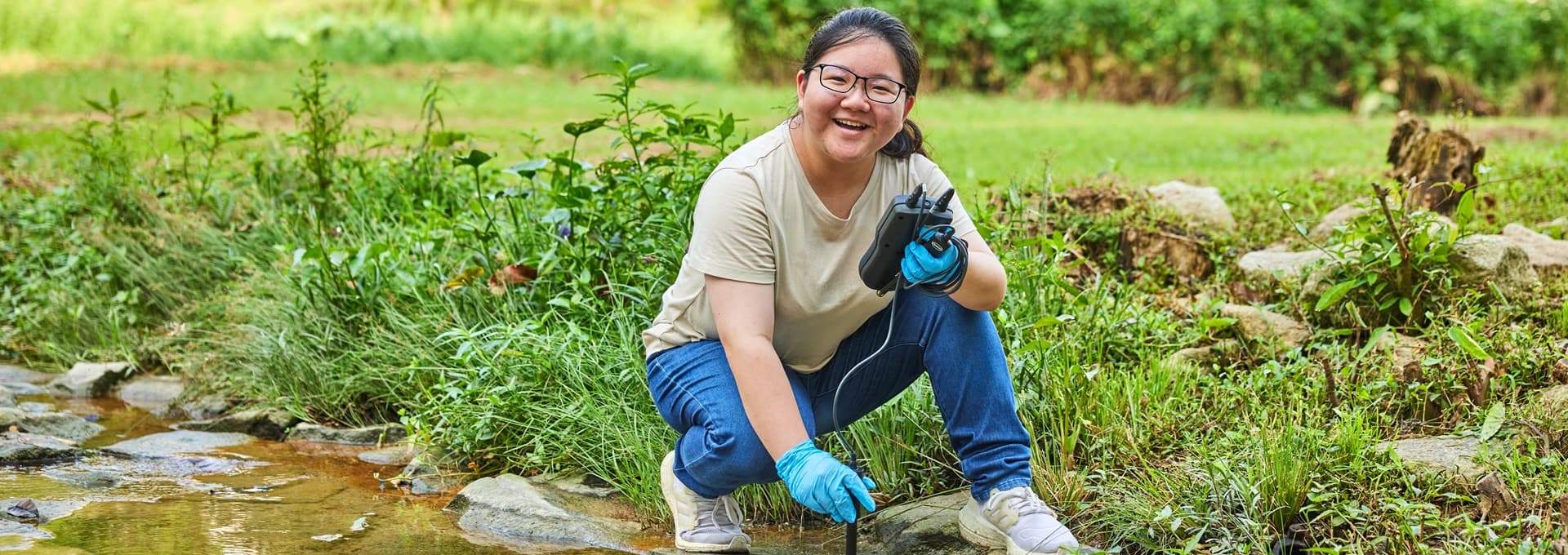
Gain practical skills through field trips and learning journeys to Bishan-Ang Mo Kio Park, NEWater treatment plant and Sustainable Singapore Gallery.

In your final year, enhance your skills through a capstone project addressing real-world problems and a six-month internship with organisations such as PUB, Sembcorp, Xylem Water Solutions, and Marchwood Laboratory Services. Additional opportunities include working with NP’s Centre for Environmental Sustainability (CfES) on green solutions, cutting-edge innovations in energy efficiency, waste valourisation, and circular economy solutions.

Explore technologies such as Internet of Things (IoT), artificial intelligence, and machine learning, and their applications in environmental processes. Engage in environmental analytics and learn to deploy IoT.

You will apply your knowledge in multidisciplinary projects and hands-on activities, including operating drones for environmental monitoring.

Enhance your portfolio by participating in competitions such as the WorldSkills Competition, PUB Splash Lab Competition, Xylem Global Student Innovation Challenge and Sembcorp Greenwave Competition. The course also offers opportunities to earn additional skills certifications — bizSAFE Level 2, and noise monitoring and noise control certificates — for you to gain an edge in the competitive job market, especially with employers focusing on workplace safety and environmental management.

Teo Chun Yi

My time in NP allowed me to pursue my passion for the environment, and pick up the knowledge and skills required for the industry. I also had the opportunity to participate in conferences like Pre-University Seminar and Poly Forum, where I learnt from diverse views and opinions on topics such as food waste and social inequality. Looking forward, I hope to be able to research and implement innovative and sustainable solutions for Singapore's green future.

Overview of Your ESS Journey

Infographic for Diploma in Environmental & Water Technology

Highlights

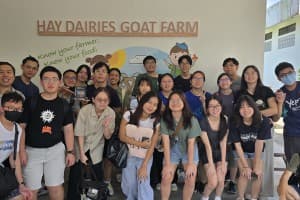
Hay_Dairies_Circular Economy

Circular Economy Insights

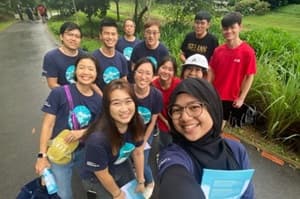
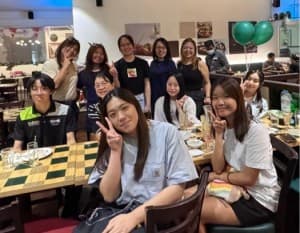
EWT students taking a selfie after giving back to the community

Giving back to the Community

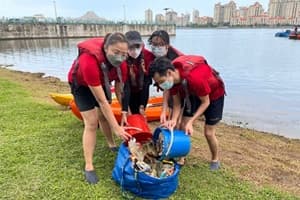
The Green Volunteers from EWT

Kayak river clean up organised by Green Volunteers
Real-World-Application

Real-world Application

Cleaner water for disaster relief

Cleaner water for disaster relief

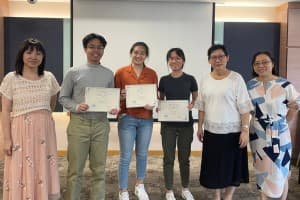
Photo of Raine Lim at Worldskills Competition

WorldSkills Champion

Impactful Internships
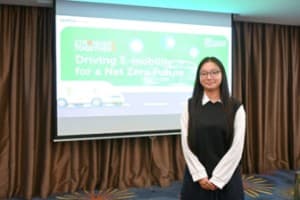
FairPrice_Chiam_ESS

With the support and guidance from my supervisor and colleagues, I had an incredibly enriching internship experience at FairPrice Group (FPG) as a Sustainability Intern. I was given numerous opportunities to gain valuable real-world experiences, learning the ropes of sustainability in the corporate world. My responsibilities included managing projects focused on suppliers’ engagement and education, collecting and analysing carbon data, and organising, planning, and executing sustainability events. Through these experiences, I have grown in my communication, project management, and technical skills, preparing me well for a future in the field. I am truly grateful for the invaluable learning and growth I gained during my internship experience with FPG.​

Chiam Zhi Quan

Year 3 Environmental & Water Technology* Student
* Renamed as Diploma in Environmental Science & Sustainability

Zhi Quan was a great support to the Sustainability Team in FairPrice Group (FPG)! She consistently demonstrated professionalism, dedication, and a genuine eagerness to learn and grow. During our inaugural FPG GenZero: Stronger Together Conference, she showed initiative in managing and resolving several audiovisual challenges, ensuring the event ran smoothly. Zhi Quan exceeded the expectations of an intern, and it was a joy having her on the team!

Ms. Yeo Yin-Yin​

Director, Sustainability Office.

EcoSpace_Dylan_ESS

During my internship at EcoSpace Pest Management Pte Ltd, I had an exciting opportunity to gain hands-on experience and insight into how the company operates both in the office and on-site. Most of my time was spent supporting office operations - updating customer details, organizing photos, assisting with logistics, and entering service reports into the system. I also had the chance to accompany technicians on-site, where I observed pest control procedures in action and learned about the various chemicals and techniques used to treat different types of pests.

This internship was an enriching and eye-opening experience that strengthened my computer and organizational skills, deepened my understanding of how office and field operations work together, and expanded my knowledge of the pest control industry. Overall, it was a rewarding journey that helped me grow to become more responsible, independent, and confident in a professional setting. ​

Dylan Leong Jun Wai

Year 3 Environmental & Water Technology* Student
* Renamed as Diploma in Environmental Science & Sustainability

We would like to commend Dylan for his positive attitude and proactive approach throughout his internship at EcoSpace Pest Management Pte Ltd. His enthusiasm, eagerness to learn, and consistent display of professionalism have been greatly appreciated.

Overall, Dylan has demonstrated strong potential and commendable growth. We look forward to seeing his continued development and encourage him to maintain a healthy balance between his responsibilities, personal commitments, and educational pursuits.

Mr. Chan Kwang Wei

Director

CTM_Bernyce_ESS

My internship at Chye Thiam Maintenance Pte Ltd as an Operations Support Officer in the Quality, Environmental, Health, and Safety (QEHS) department has been an incredibly rewarding and enriching experience. I was given the opportunity to support operational activities across multiple sites and contribute to a project enhancing information accessibility for on-site officers. This journey has greatly deepened my insight into the environmental services industry while strengthening my communication, technical, and teamwork skills. I am sincerely thankful for the invaluable guidance, mentorship, and support extended by the dedicated team throughout my internship. ​

Yap Yu Ning, Bernyce

Year 3 Environmental & Water Technology* Student
* Renamed as Diploma in Environmental Science & Sustainability

Bernyce has been an outstanding intern at Chye Thiam Maintenance Pte Ltd. Her enthusiasm and dedication are evident in everything she does. She collaborates effectively with the team and demonstrates strong initiative when conducting independent research. Her thoughtful approach to exploring environmental topics and ability to contribute both individually and collectively have made her an invaluable member of our projects. Bernyce’s commitment, curiosity, and hard work clearly reflect her passion for the environmental services industry.

Mr. Ng Wushen Derek

Principal Manager (Quality, Environmental, Health & Safety)

Further Studies

You can pursue various degree programmes at local universities, such as civil engineering, environmental engineering, environmental science, material science, architecture, and chemistry at National University of Singapore, Nanyang Technological University, and Singapore Institute of Technology.

Graduates may even gain final-year entry to the Bachelor of Science in Environmental Management and Sustainability, Environmental Science or Chemistry at the University of Plymouth, UK.

You may also receive module exemptions for related degrees at overseas universities, including:

Australia

  • Murdoch University
  • The University of Adelaide
  • The University of Queensland
  • The University of Western Australia
  • University of New South Wales

United Kingdom

  • Newcastle University
  • The University of Manchester
  • The University of Birmingham
  • The University of Plymouth
Headshot of Tan Shern Kai

Tan Shern Kai
Environmental & Water Technology* graduate, Class of 2021

A recipient of the Singapore Sustainability Scholarship, Shern Kai will be pursuing a degree in Civil Engineering at NTU. 

* Renamed as Diploma in Environmental Science & Sustainability

Headshot of Tham Yin Wen

Tham Win Yen
Environmental & Water Technology* graduate, Class of 2019

A recipient of the iBuildSG scholarship, Win Yen is currently pursuing a degree in Civil Engineering at NTU.

* Renamed as Diploma in Environmental Science & Sustainability

Industry Partners

EWT industry partners' logos

Careers

You will be prepared for careers in multinational corporations, government agencies, university labs, and research institutes, such as:

  • Assistant Engineer
  • Assistant Process Engineer
  • Environment, Health & Safety (EHS) Officer
  • Lab Analyst / Officer
  • Research Engineer
  • Sustainability Officer
  • Water Treatment Specialist

Additional certificates will also qualify you for jobs such as a Noise Monitoring or Noise Control Officer.

Ho Jia Le_ESS2017

Ho Jia Le
Environmental & Water Technology* graduate, Class of 2017

Ho Jia Le is currently an engineer at Tuas Water Reclamation Plant at PUB, Singapore’s National Water Agency, Jia Le was also a recipient of the Singapore Sustainability Scholarship

* Renamed as Diploma in Environmental Science & Sustainability

ESS_Megan_2022

Megan Choo
Environmental & Water Technology* graduate, Class of 2022

After completing a degree in Environmental Management and Sustainability at Plymouth University, UK, Megan is currently a business development executive at Circular Unite

* Renamed as Diploma in Environmental Science & Sustainability

Headshot of vikram

Vickramathithaan
Environmental & Water Technology* graduate, Class of 2016

Vickram is an executive engineer at PUB, Singapore’s National Water Agency.

* Renamed as Diploma in Environmental Science & Sustainability

Headshot of qian min

Lor Qian Min
Environmental & Water Technology* graduate, Class of 2021

A lab analyst at SGS Testing & Control Services Singapore, Qian Min earned a Specialist Diploma in Analytical Science after completing a work-study programme.

* Renamed as Diploma in Environmental Science & Sustainability

Entry Requirements

AGGREGATE TYPE ELR2B2-C

To be eligible for consideration, candidates must have the following GCE ‘O’ Level examination (or equivalent) results.

Subject'O' Level Grade
English Language1-7
Additional Mathematics/Mathematics1-6
Any one of the following subjects: 

Biology
Biotechnology
Chemistry
Computing/Computer Studies
Design & Technology
Electronics/Fundamentals of Electronics
Physics
Science (Chemistry, Biology)
Science (Physics, Biology)
Science (Physics, Chemistry)
1-6

Applicants must also fulfil the aggregate computation requirements for the ELR2B2-C Aggregate Type ( English Language, 2 relevant subjects and 2 other best subjects) listed at www.np.edu.sg/docs/ELR2B2.pdf.

For students with other qualifications, please refer to the NP website for the entry requirements and admissions exercise period.

What You Will Learn

Engineering Mathematics 1 (6 Credit Units)

The module provides students with an adequate foundation of Engineering Mathematics that will enable them to acquire the necessary mathematical skills required in other engineering subjects. Students will also use a mathematical software package to solve mathematical problems.

Environmental Engineering Principles (3 Credit Units)

The module introduces students to basic engineering concepts and applications, for example, units and dimensions, mass balance calculations, and reaction stoichiometry. Upon completion of this module, students will be able to undertake basic engineering calculations.

Environmental Analytics & IoT (4 Credit Units)

The module provides an introduction to the use of emerging technology and innovations such as AI, remote sensory ecosystem, cloud data storage, dashboarding, drone ecological monitoring, sustainable power generation and smart energy monitoring to increase performance in water, air quality and the energy environment. maintenance/calibration of GIS equipment operations. The module also provides hands-on practice. Students will build remote sensory systems to monitor air quality and water quality from sustainable energy source.

Part 2 of this module provide students with basic data analytics skills which includes understanding of statistics, data processing, and data visualization. Students will also learn about the basics of programming in Python, understanding the types and sources of environmental monitoring data, analysis of data retrieved from sensors, descriptive statistics and visualizing environmental data.

Inorganic & Physical Chemistry (4 Credit Units)

This module covers the principles of physical chemistry as well as the reactions and properties of inorganic compounds. Students will study the structure of matter, chemical bonding, chemical calculations, electrochemistry and redox reactions, chemical equilibria, ionic equilibria, chemical kinetics, thermochemistry, transition metal chemistry and chemistry of solutions, including acids and bases.

English Language Express* (Credit Units - NA)

English Language Express aims to give you a better grounding in the English Language and to strengthen the written and oral communications skills that you will need in your academic and professional careers. You will be engaged in writing, reading, listening and speaking activities that will develop your ability to speak and write grammatically, coherently and clearly. You will also hone your reading and listening comprehension skills.

Innovation Made Possible^ (3 Credit Units)

Career & Professional Preparation 1 (1 Credit Units)

This module is part of the Education and Career Guidance framework to provide students with the tools and resources necessary for their career and/or further education. In this first module, students will undergo personal discovery and exploration of industry and career prospects. Students will learn how to plan and set achievable goals in preparation for their future. Students will also learn the importance of passion and professionalism, along with basic teamwork and interpersonal skills.

Civil Engineering Fundamentals (4 Credit Units)

This module explores the fundamental principles and practices of civil engineering. It provides students with an understanding of the main types of civil engineering structures and construction processes. It also covers the theory of statics and mechanics of materials, with applications to a range of environmental engineering projects and emerging trends relating to the field of civil engineering.

Engineering Mathematics 2 (4 Credit Units)

A continuation of the Engineering Mathematics I module, this module provides students with an adequate foundation of Engineering Mathematics that will enable them to apply the mathematical skills for their careers and/or further studies. The emphasis of this module is placed on their applications in solving engineering related problems. Students will also use a mathematical software package to solve mathematical problems.

Environmental Microbiology & Biotechnology (3 Credit Units)

The module covers fundamentals of microbiology and biotechnological methodologies to assess the well-being of ecosystems, transform pollutants to harmless substances, generate biodegradable materials from renewable sources, and develop eco-friendly manufacturing and disposal processes. Applications, including recent developments in the field of microbiology and biotechnology in aspects relating to the environment will be covered.

Hydraulics (4 Credit Units)

Students will learn the basic hydraulic principles and concepts which are essential for the study of water and wastewater treatment technologies. Students will be exposed to properties of fluids, manometers, hydrostatics and fundamental principles of fluid flow. Head losses in pipeline, design of pipeline, flow measurements and pipe network analysis will be covered. Students will also learn about open channel flow, the design of surface water drainage systems and pumping pipeline systems.

Confident Communication: Find Your Voice (VOICE)^ (3 Credit Units)

The VOICE module aims to empower students to become thoughtful and confident communicators able to tailor a message to suit audience, purpose and context. Students will learn how to use storytelling structures and techniques, persuasive strategies and effective visuals to connect meaningfully with their audience. Through a personalised growth plan, the module encourages students to reflect, set goals and take ownership of their growth and development as communicators. The module employs engaging teaching strategies such as games, thinking routines, masterclasses and workshops, and a celebratory showcase festival at the end to make learning fun and exciting.

Health & Wellness (1 Credit Unit)

This is a Level 1 Core module for all Year 1 students. The module will introduce students to the importance of maintaining both physical and mental health through the knowledge and monitoring of health indicators, and application through appropriate exercises. The aim of the module is to empower students with basic knowledge and skills to be independent and responsible in maintaining overall personal health. 

Air Quality Monitoring & Control (3 Credit Units)

This module covers monitoring and control of both outdoor and indoor air pollution. Students are taught the fundamentals of types of pollutants, and their environmental and health impacts. Dispersion modelling, indoor air quality audit, sampling and monitoring of pollutants, techniques of identification of pollutants, preventive and control measures, local environmental legislation and guidelines on air quality including PSI will be introduced.

Career & Professional Preparation 2 (2 Credit Units)

This module is part of the Education and Career Guidance framework to provide students with the tools and resources necessary for their further career and/or education. In this module, students will explore basic job search strategies, practice writing effective resumes and cover letters, and learn interview skills. Students will also learn professional and intercultural communication skills to prepare them for a dynamic and diverse workplace.

Climate Change Mitigation & Adaptation (4 Credit Units)

This module introduces the fundamentals on global environmental issues, causes and impacts of climate change on the environment and community, hydrology, ABC waters management, national climate change targets and plans, adaptation and mitigation strategies. Strategies for coastal protection and enhancing flood resilience will also be highlighted. Besides national efforts, students will also learn about climate change adaption on the individual level.

Energy & Environmental Management Systems (3 Credit Units)

In this module, students gain an understanding on the various Standards, and learn about the International Organization for Standardization (ISO) for Energy (ISO50001) and Environmental Management Systems (ISO14000). Students will learn the application of concepts and principles in energy and environmental management frameworks such as the fundamentals of environmental impact assessment (EIA), environmental baseline studies (EBS) and environmental auditing.

Solid & Hazardous Waste Management (3 Credit Units)

In this module, students will be taught how solid and hazardous waste is generated, methods of collection, handling, treatment, disposal of waste and related pollution impacts. Concepts of waste minimisation such as recycling, reuse, reduction and waste exchange will be highlighted as effective tools for sustainable waste management and resource circularity. Students will also learn about issues relating to hazardous waste with emphasis on biomedical waste generation, collection and treatment, plastic, food and e-waste. Local legislation for solid and hazardous waste will be emphasized and explained in relation to the overall waste management system and circularity of resources

Water Supply Technology & Design (4 Credit Units)

This module introduces the concepts of water treatment technologies for treating raw water from various sources and dhow it is important in closing the water loop in Singapore. The focus in this module is to impart knowledge of conventional and emerging water treatment technologies. Topics covered include pre-treatment, sedimentation, filtration and disinfection techniques for the treatment of potable water.

Adverse effects of hardness and hardness treatment using chemical methods and the use of ion-exchange processes are covered in detail. Practical problems associated with the operation and maintenance of water treatment plants including mechanical & electrical equipment and possible solutions for these problems will be emphasised.

Circular Economy & Environmental Sustainability Management (4 Credit Units)

This module will provide students with the background, governmental and international regulations, and awareness on environmental issues and national/ international initiatives. It will focuses on 4 main pillars of sustainability, namely carbon footprint management, sustainable water management, circular economy and alternative/ clean energy.

Health, Safety & Environment (4 Credit Units)

This module covers the relevant legislation and standards pertaining to workplace safety and health. Students will be taught to identify the various types of workplace hazards and the means of protection and control against these hazards. Topics include risk assessment and control, safety management systems, job safety analysis, accident reporting and investigation. Students will be issued WSHC recognised bizSAFE Level 2 certificates upon completion of this module.

Noise Monitoring & Control (5 Credit Units)

Singapore’s rapid economic growth towards an industrialised and urbanised society coupled with an affluent population has resulted in a greater need to control noise in the general environment. The control of noise pollution is essential in all aspects of work and students will be taught the fundamentals of how noise pollution arises, health impacts of noise, measurement and monitoring of noise levels, preventive and control measures and local environmental legislation. Students will also learn about noise mapping using relevant design tools. The module provides for two Skills-Framework aligned certifications under Competency unit of Monitor Noise and Vibration and Competency unit of Control Noise and Vibration.

Water & Environmental Chemistry (5 Credit Units)

This module introduces students to key aspects of environmental and water chemistry for application in pollution control, resource recovery, and water and wastewater treatment. Students will learn quantitative measurements and analysis of solid wastes, water and wastewater. Principles of measurement, instrumentation and analysis are emphasised using an application-oriented approach.

World Issues: A Singapore Perspective^ (2 Credit Units)

Capstone Project (8 Credit Units)

In this module, students are given the opportunity to work with industry-linked project to solve real-world problems. They are expected to integrate the knowledge they have gained in the earlier semesters to undertake an environmental project on a related topic in the field of sustainability, water, environmental science and technology.

Industrial Wastewater & Membrane Technology (5 Credit Units)

Characteristics of industrial wastewater vary with the industrial process and Advanced Oxidation Processes. Treatment methodology adopted varies with the type of wastewater. Membrane applications are taking an edge as a treatment option. Topics that will be covered include unit processes and treatment technologies applicable to industrial wastewater treatment and specific industrial wastewater case studies. Students will be introduced to membrane science and applications in environmental engineering. Membrane applications in water reclamation, recycling and reuse including desalination technology will be taught. Case studies will be used to illustrate specific industrial applications.

Water Pollution & Reclamation Technology (4 Credit Units)

This module introduces students to sewage characteristics, sewer design and maintenance and unit operations in a conventional and updated wastewater treatment systems It covers the fundamentals of sewage collection systems for domestic wastewater, wastewater treatment technologies, monitoring and operation of wastewater treatment systems and the code of practice relevant to sewerage and wastewater treatment. Students will be given an overview of water pollution and impact of pollution on different types of waterbodies. Students will also learn about sludge treatment, gas production and disposal technologies. Emerging technologies in water reclamation and water recycling will be emphasised.

Project ID: Connecting The Dots^ (4 Credit Units)

6-Month Internship (Local / Overseas) (20 Credit Units)

Students will be attached to organisations for a period of six months. This module will prepare them for future employment in their particular discipline of study. During their internship, they will undertake projects and tasks assigned by the organisations. This allows them the opportunity to take initiatives as well as to develop their soft skills.