Why CBE?
- Explore exciting career opportunities in future-focused industries, including biopharmaceuticals, petrochemicals, semiconductors, energy and sustainability
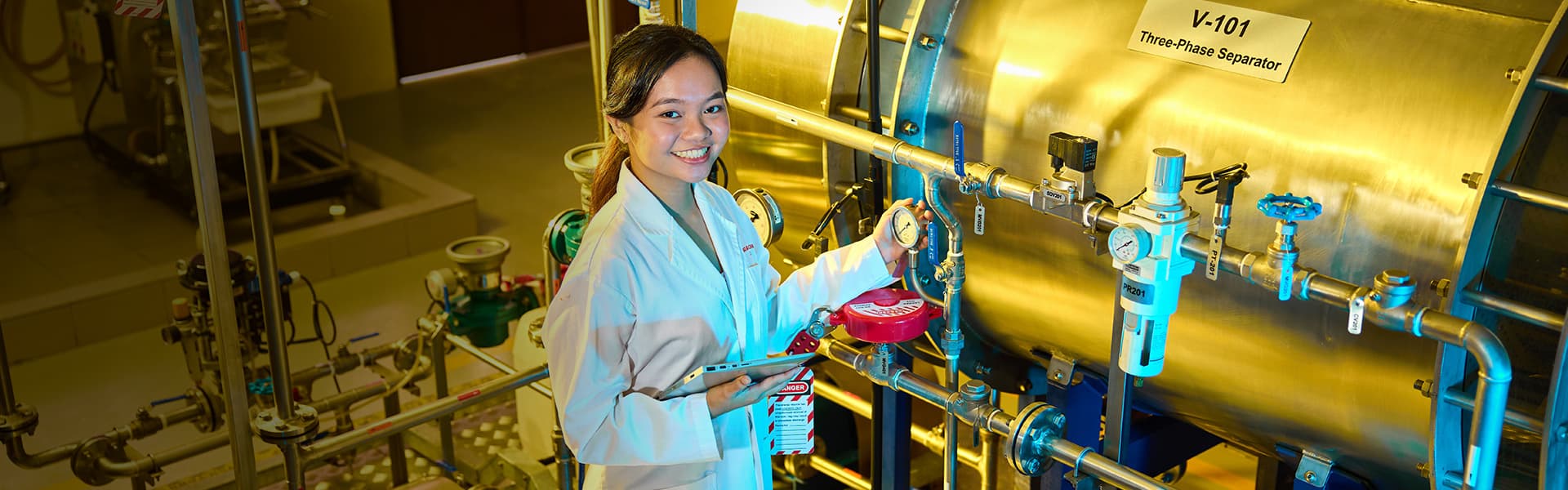
- Gain hands-on experience at our modular pilot plant, where you will operate and manage systems using simulation tools and digital twin technology
- Build real-world industry experience through internships, mentorships and capstone projects with MNCs such as GSK, Lonza, Pfizer, ExxonMobil, Shell, Merck, Air Liquide and Siemens
- Gain specialised knowledge and skills to enhance your career prospects through the Sustainable Energy & Chemistry or Biopharmaceutical track
- Fast-track your university journey through pathway programmes with NUS and NTU
What is the Diploma in Chemical & Biomolecular Engineering about?
Ever wondered how everyday products — from medicines and microchips to food and fuels — are made safely, efficiently and at scale? NP’s Diploma in Chemical & Biomolecular Engineering (CBE) shows you how science and engineering come together to produce all these essentials and solve real-world problems in biopharmaceuticals, chemicals, semiconductors and manufacturing.
Is CBE more about chemistry, biology or engineering?
CBE combines all three. You will build your foundation in chemistry and biological sciences, then use engineering to turn ideas from the lab into solutions that can work in the real world.
Instead of just learning what happens in a chemical reaction, you will learn how to scale it up, make it safer, reduce waste and improve performance. Along the way, you’ll explore chemical and biomolecular engineering, organic and biological chemistry, thermodynamics, biopharmaceutical technology and analytical chemistry.
What skills will you gain?
Build digital skills in data analytics, simulation and process optimisation through hands-on learning in automated pilot plants and simulated refineries.
You will also discover how engineers design cleaner, smarter and more sustainable ways to make the products the world needs.
What can you specialise in?
In your final year, choose one of two specialisation tracks:
- Sustainable Energy & Chemistry: Develop greener solutions through chemical engineering and environmental management, and work on a real-world sustainability challenge capstone project.
- Biopharmaceutical: Learn how medicines are made, from cell culture and product purification to biopharmaceutical manufacturing, while building practical skills for the industry.
How will you gain industry experience?
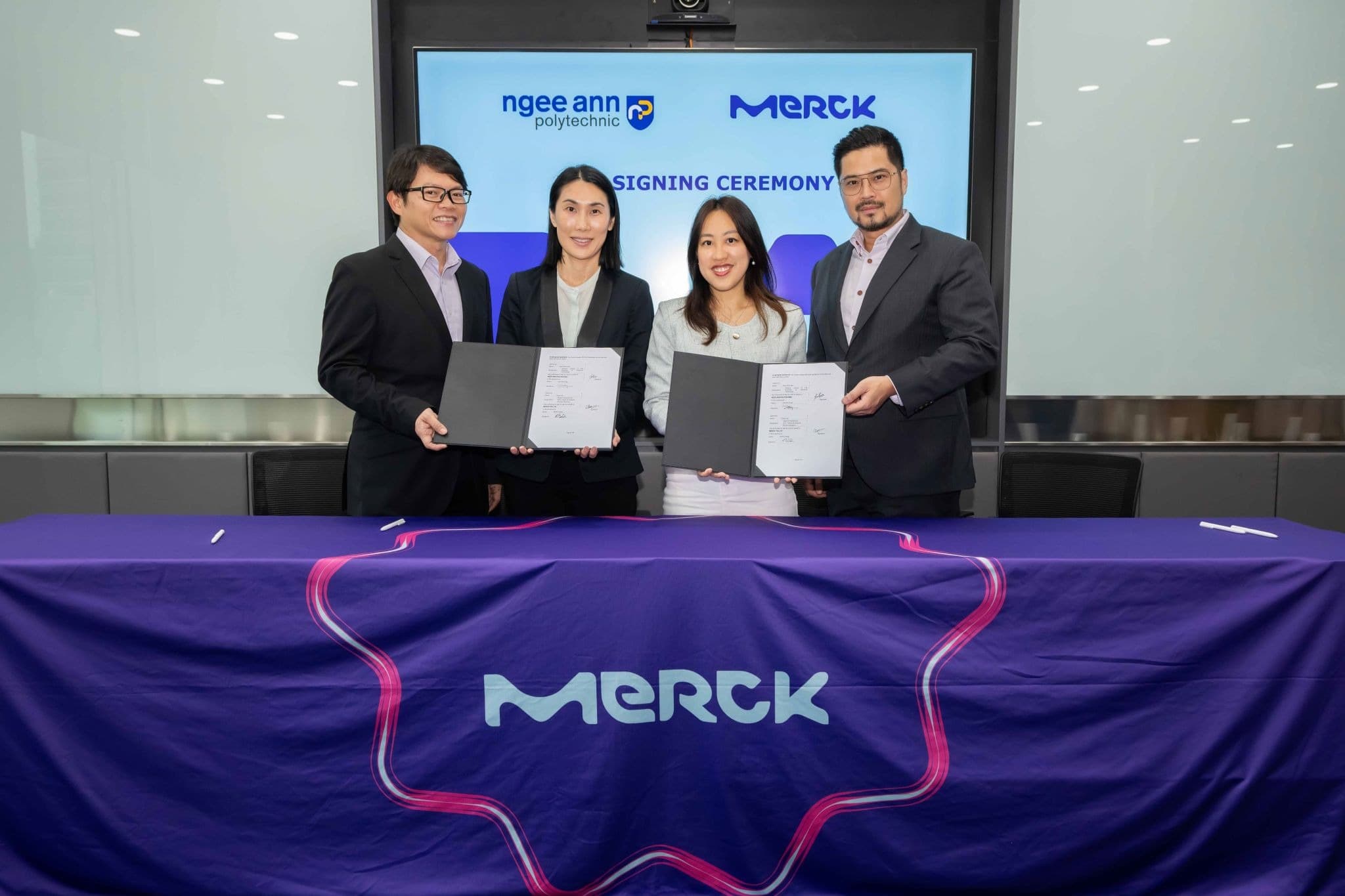
Learn from modules developed with industry partners such as Air Liquide and Merck, and gain exposure to advanced equipment and industry professionals at Merck’s M Lab Collaboration Centre.
In your final year, choose between an industry internship with companies such as Air Liquide, Merck, Shell, Aster, GSK, Pfizer and Lonza, or a research internship with institutions like A*STAR or an overseas research institution.
Can you get a head start in university?
Yes! Get a university head start through the NP-NUS or NP-NTU Pathway, available to selected students. You can take university-level modules while studying at NP, which may count towards your degree later and help you fast-track your studies.
Further Studies
With a strong foundation in science and engineering, you are well prepared to pursue a wide range of degrees offered by local universities. You may also enjoy module exemptions when you apply for related degree programmes at overseas universities, including:
Australia
- The University of Adelaide
- The University of Melbourne
- The University of Queensland
- The University of Western Australia
- University of New South Wales
United Kingdom
- Imperial College
- Newcastle University
- The University of Manchester

Zenn Tan Zhen
Class of 2026
Recipient of the Engineering Scholars Programme Scholarship. Pursuing a double degree in Chemical Engineering and Economics at NUS.
Yu Ruoxi
Class of 2026
Pursuing a double degree in Chemical Engineering and Management at NUS.

Jovin Han
Class of 2024
Pursuing a degree in Chemistry and Biological Chemistry with a second major in Food Science at NTU.

Tang Xin Ming
Class of 2022
Pursuing the Renaissance Engineering Programme at NTU.

Teo Zhan Rong
Class of 2022
Recipient of the NUS Global Merit Scholarship. Pursuing Chemical & Biomolecular Engineering degree at NUS.
Impactful Internships
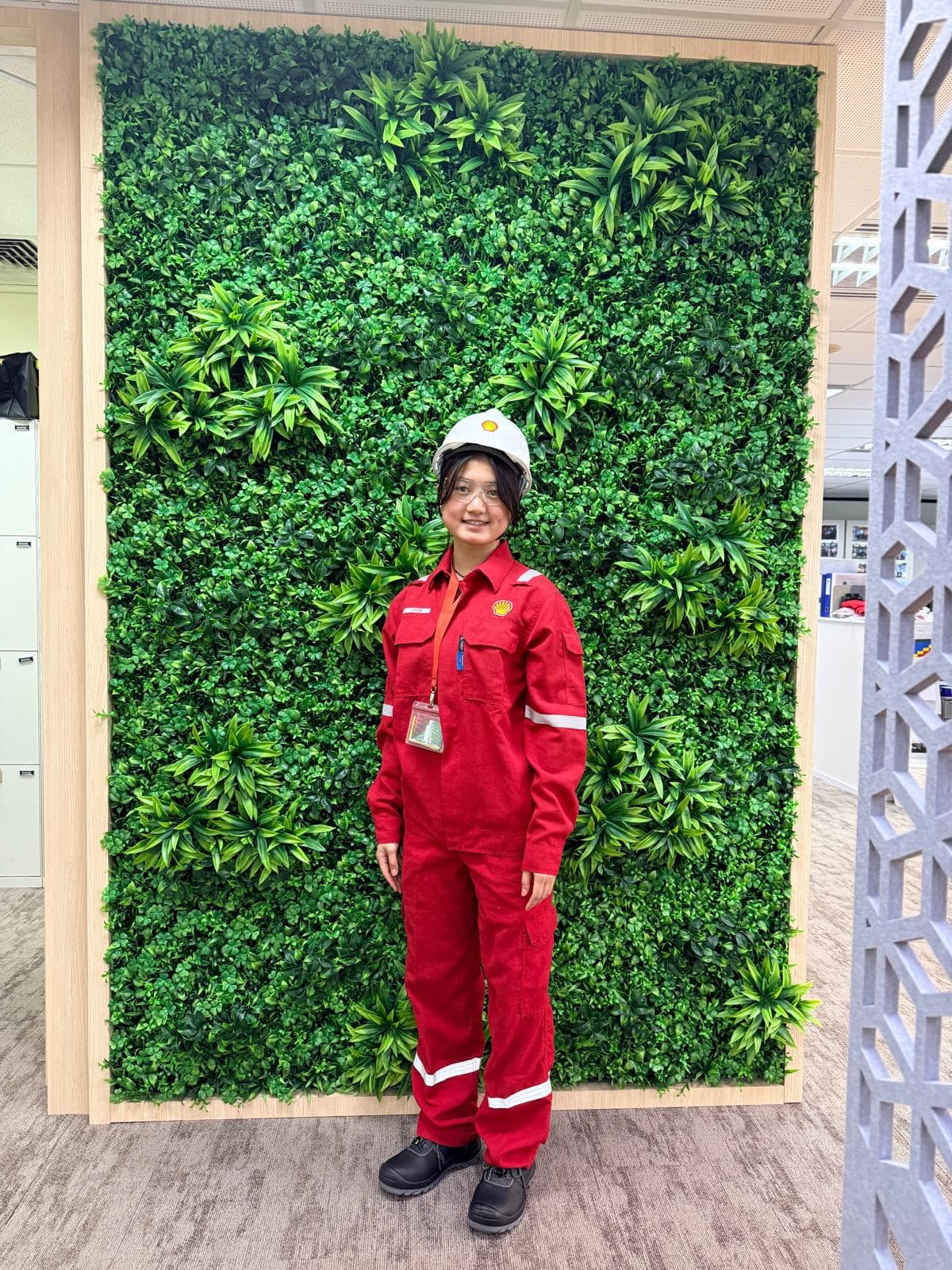
My internship with Shell’s Low Carbon Solutions business allowed me to apply what I learnt at NP to real-world sustainable fuel projects. It deepened my passion for sustainability and inspired me to combine engineering and business knowledge to develop practical solutions that make a difference.
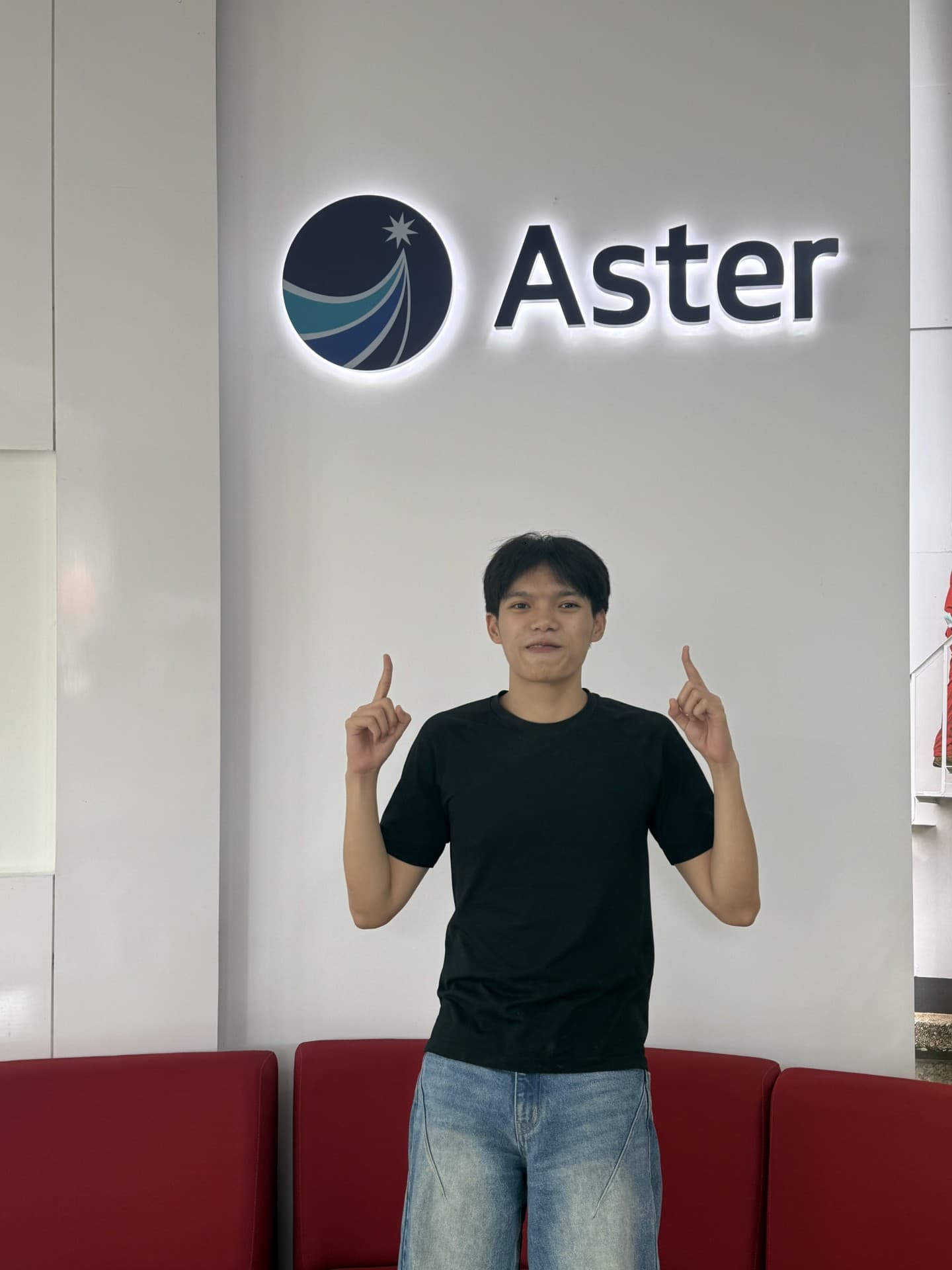
Working at Aster Chemicals & Energy gave me first-hand experience of refinery operations and the opportunity to apply the knowledge and skills I gained at NP. It was an invaluable experience that strengthened my understanding of the industry and showed me how classroom learning translates into real-world applications.
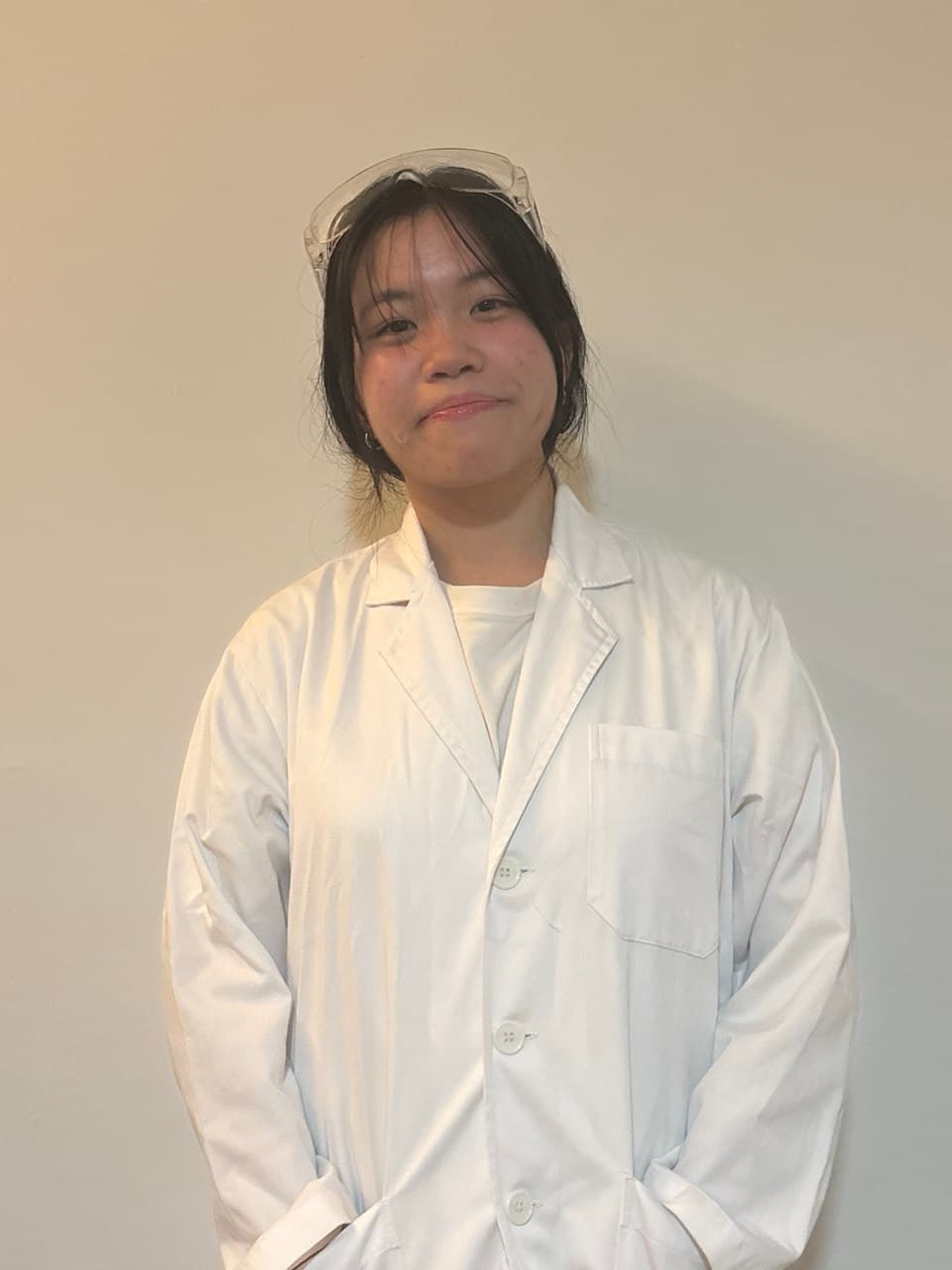
During my internship at A*STAR’s Institute of Molecular and Cell Biology, I had the opportunity to contribute to research on liver cancer while gaining hands-on experience in molecular biology. Beyond strengthening my research and problem-solving skills, the experience opened my eyes to how Chemical Engineering can be applied in different fields, including healthcare.
Industry Partners

Careers
With its multidisciplinary curriculum and industry-relevant training, CBE opens doors to a wide range of career pathways in sectors from chemical, biotechnology to food and beverages.
You can look forward to rewarding career options such as:
Biotechnology & Process Operations
- Biotechnologist
- Process Engineer
Laboratory & Testing
- Laboratory Technologist / Analyst
Quality Assurance & Control
- Quality Assurance/Control Lead
- Operational Quality Lead

Rey Chow
Class of 2010
Lead Production Specialist, Movement and Logistics at Aster Chemicals & Energy Pte. Ltd.
Ninette Lee
Class of 2013
Senior Reliability Engineer in MSD (Merck & Co.)
Khairul Syahmi
Class of 2015
Senior Process integration engineer at Micron Technology.
Entry Requirements
AGGREGATE TYPE ELR2B2-C
To be eligible for consideration, candidates must have the following GCE ‘O’ Level examination (or equivalent) results.
| Subject | 'O' Level Grade |
|---|---|
| English Language | 1-7 |
| Additional Mathematics/Mathematics | 1-6 |
| Any one of following subjects: Biology Biotechnology Chemistry Computing/Computer Studies Design & Technology Electronics/Fundamentals of Electronics Physics Science (Chemistry, Biology) Science (Physics, Biology) Science (Physics, Chemistry) | 1-6 |
Applicants must also fulfil the aggregate computation requirements for the ELR2B2-C Aggregate Type ( English Language, 2 relevant subjects and 2 other best subjects) listed at www.np.edu.sg/ELR2B2.pdf.
For students with other qualifications, please refer to the NP website for the entry requirements and admissions exercise period.
What You Will Learn
CBE in 60 Seconds
Highlights
Empowering Future-Ready Graduates with Siemens SG
NP has partnered Siemens to enhance industry relevance for Chemical & Biomolecular Engineering students. Through hands-on training, industry-led projects, and exposure to real-world technologies such as process control and automation, students will gain future-ready skills for careers in fast-evolving sectors.
Read more about it at: Empowering Future-Ready Graduates with Ngee Ann Polytechnic - Siemens SG

Gain an Edge with Merck
Through NP's partnership with global science and technology company Merck, students will gain hands-on experience with industry technologies and develop skills relevant to biopharmaceutical manufacturing. With modules co-designed and co-delivered by Merck, as well as internship opportunities, students will be better prepared for careers in the pharmaceutical and biopharmaceutical sectors.