Library


Library Milestones
From Humble Beginnings to Modern Innovation
Founding Legacy
Ngee Ann Library began modestly in a small room at the Ngee Ann Kongsi Building on Tank Road, coinciding with the establishment of Ngee Ann College.
Evolutionary Growth
Over the years, the Library transformed from a basic collection serving staff and students with books, periodicals, and printed materials into a comprehensive information hub incorporating audio-visual resources and modern media.
This remarkable evolution from a single room to a multi-format information centre reflects the Library's commitment to adapting and expanding services to meet the changing educational needs of the Ngee Ann community.
NP Library achieved national recognition for innovation with Singapore’s first unmanned polytechnic library, winning the Innovation & Enterprise (Technology) Gold Award. Through advanced analytics, mobile authentication, AI-driven learning, sustainability education, and collaborative community initiatives, the Library has established itself as a leader in educational technology, operational excellence, and future-ready learning.
NP Library elevated the Power Up! Festival into a comprehensive skills development ecosystem through expanded partnerships with leading industry players, in-house AI literacy training, and the launch of unified digital platforms—empowering students with cutting-edge digital, technical, and career-ready skills for the future.
NP Library advanced digital transformation and community engagement through a fully redesigned digital ecosystem, impactful reading and outreach initiatives, and cross-polytechnic collaboration on 24 resource guides—positioning itself as a digital-first, community-driven hub that integrates seamless access, lifelong learning, and future-ready skills development.
NP Library strengthened its leadership in future-ready learning through strategic partnerships, cross-polytechnic collaboration, and advanced automation—driving personalised hybrid learning with smart books, leading the Joint-Poly Libraries Framework, and pioneering smart infrastructure and robotic services to empower over 60,000 students with industry-relevant digital literacy and critical thinking skills.
NP Library demonstrated innovation and crisis leadership through award-winning data projects, proactive COVID-19 responses, and the pioneering Digital Life@NP™ framework—adopted nationwide as Digital Life@Polys™—while enhancing digital access and ensuring uninterrupted learning through resilient, user-focused technologies.
NP Library emerged as Singapore’s polytechnic leader in digital literacy education through its nationally recognised Digital Life@NP™ framework, AI-powered “Ask Coppie” chatbot, cloud-based library platform, and innovative training initiatives—delivering engaging, future-ready learning experiences adopted across the polytechnic system.
NP Library strengthened its role as a digital learning and community hub through smart discovery tools, enhanced e-learning platforms, and digital literacy initiatives—while fostering engagement via reading campaigns, digital skills events, and expanded access through eReads@NP and records management governance aligned with NP’s future-ready vision.
NP Library expanded its learning and digital capabilities with the launch of a Finance Lab featuring 12 Bloomberg workstations, new collaboration spaces, and a Recording Pod; broadened Information Literacy to Digital Literacy with e-learning packages on Blackboard; digitized the visitor log via iPad; and curated resources supporting key institutional initiatives such as Service-Learning, Signature Pedagogies, Core Competencies, and Performance Conversations.
NP Library advanced skills development and learning spaces through digital portfolio training, community reading initiatives, upgraded library systems, and redesigned collaborative areas—empowering students with career-ready skills, fostering reading engagement, and supporting interactive, technology-enabled learning.
ChatGPT said: NP Library enhanced its room booking system with email confirmations to eliminate paper slips, implemented Virtual Server Infrastructure for cost savings and scalability, adopted blended learning approaches to promote resource engagement, and introduced a Copyright e-Notation stamp to support proper content use.
NP Library enhanced navigation and digital learning through interactive touchscreen guides, eGames, online orientation courseware, Android app support, and a Media Station for Overdrive content—creating an intuitive, inclusive, and engaging environment that supports self-directed learning and seamless resource discovery.
ChatGPT said: NP Library transformed into a technology-rich, interactive learning hub through multi-touch and Smart Cube installations, enhanced OPAC with unified publication access, and expanded mobile app compatibility—empowering students to collaborate, discover resources seamlessly, and learn anytime, anywhere.
ChatGPT said: NP Library advanced student-centric services and digital innovation through the NP Online Bookshop, enhanced mobile app, unified search and journal access systems, online orientation courseware, and upgraded technology infrastructure—creating a seamless, cost-effective, and accessible learning ecosystem for the NP community.
NP Library expanded its social media presence with a Twitter account complementing its popular Facebook page, strategically reaching students on key platforms to boost visibility, promote resources, and enhance engagement with library services.
NP Library enhanced its digital platforms through an upgraded ASP.Net room booking system, launch of its Facebook page, implementation of ALEPH and PRIMO systems for Google-like searches, and introduction of a mobile app—offering seamless, user-friendly access to library services across web, social media, and mobile channels.
NP Library implemented the MetaLib federated search engine was implemented in March to replace WebFeat. NP Library’s Homepage was revamped to facilitate access to resources. The Library entrance was redesigned.
NP Library led pioneering educational initiatives as Singapore’s first tertiary library to launch a Wealth Creation InfoCentre and Booksharing@NP, while enhancing digital access through EzProxy and online room booking—advancing financial literacy, reading culture, and seamless learning beyond campus.
First local library to set-up a Board Games Zone in Lifestyle Library. RFID self-service was implemented on CDs/DVDs/VCDs and Feature Films Collection in Lifestyle Library. The Opening of Lien Ying Chow Gallery.
The Lien Ying Chow Gallery transforms Dr Lien’s legacy into a living educational space, showcasing his life story and housing resources on Asian entrepreneurship, philanthropy, and leadership to inspire students with real-world examples of success and service.
The NP Library was renamed Lien Ying Chow Library (LYCL) in 2007, featuring a dedicated gallery honouring founding father Dr Lien Ying Chow, whose entrepreneurial spirit and philanthropy continue to inspire students and preserve NP’s rich educational legacy.
ChatGPT said: NP Library enhanced its vibrant lifestyle appeal with LIME Pod @NP, a collaboration with MediaCorp Publishing that offers popular magazines like LIME, Manja, and 8Days in a relaxed setting—blending leisure and learning to position the Library as a dynamic social and cultural hub for students.
NP Library redefined the learning experience by launching Singapore’s first Lifestyle Library with integrated café spaces, implementing 3M RFID self-service technology, and embedding research skills into the curriculum—transforming the library into a vibrant hub that blends learning, leisure, and innovation.
NP Library modernised its infrastructure with self-service video loans, a URICA system upgrade, full wireless connectivity, and a centralised Exam Papers Database, creating a seamless, technology-enabled learning environment with convenient access to academic resources.
Wireless LAN was implemented on Level 4, Library.
NP Library expanded its specialised collections with industry-recognised multimedia and design resources while enhancing user security through a 6-digit PIN system, combining enriched learning materials with stronger account protection.
The launch of the NP Library Homepage established a comprehensive digital gateway, offering 24/7 access to value-added services such as new title alerts, journal updates, and subject guides, transforming traditional library use into an integrated online research experience.
By launching the online Accession List and establishing the Regional Business Resource Centre, NP Library enhanced resource discovery and created a specialised hub for Asia-Pacific business intelligence, empowering students with timely access to new materials and regionally relevant market insights.
The NP-SQI Quality Resource Centre established a dedicated hub for productivity, quality, and reliability studies, strengthening NP’s leadership in quality education and supporting Singapore’s national drive for excellence through shared learning between students and industry professionals.
Through NPNET, NP Library realised its visionary “Library Without Walls” concept by providing seamless 24/7 digital access to global information resources, supported by integrated self-service systems that redefined both virtual and physical library experiences.
French, German, Japanese, Chinese Books and Media Collection were introduced.
Through initiatives like Read Your Way Up! and author engagement sessions with local writers, the Library fostered a vibrant reading culture by empowering students to shape collections and connect personally with Singapore’s literary community.
Information Assistant Schemes was implemented.
Individual and Corporate Membership schemes was introduced.
The Library expanded its role to lead institutional copyright management and introduced CD-ROM databases, strengthening its position as both a copyright authority and a pioneer in digital resource access.
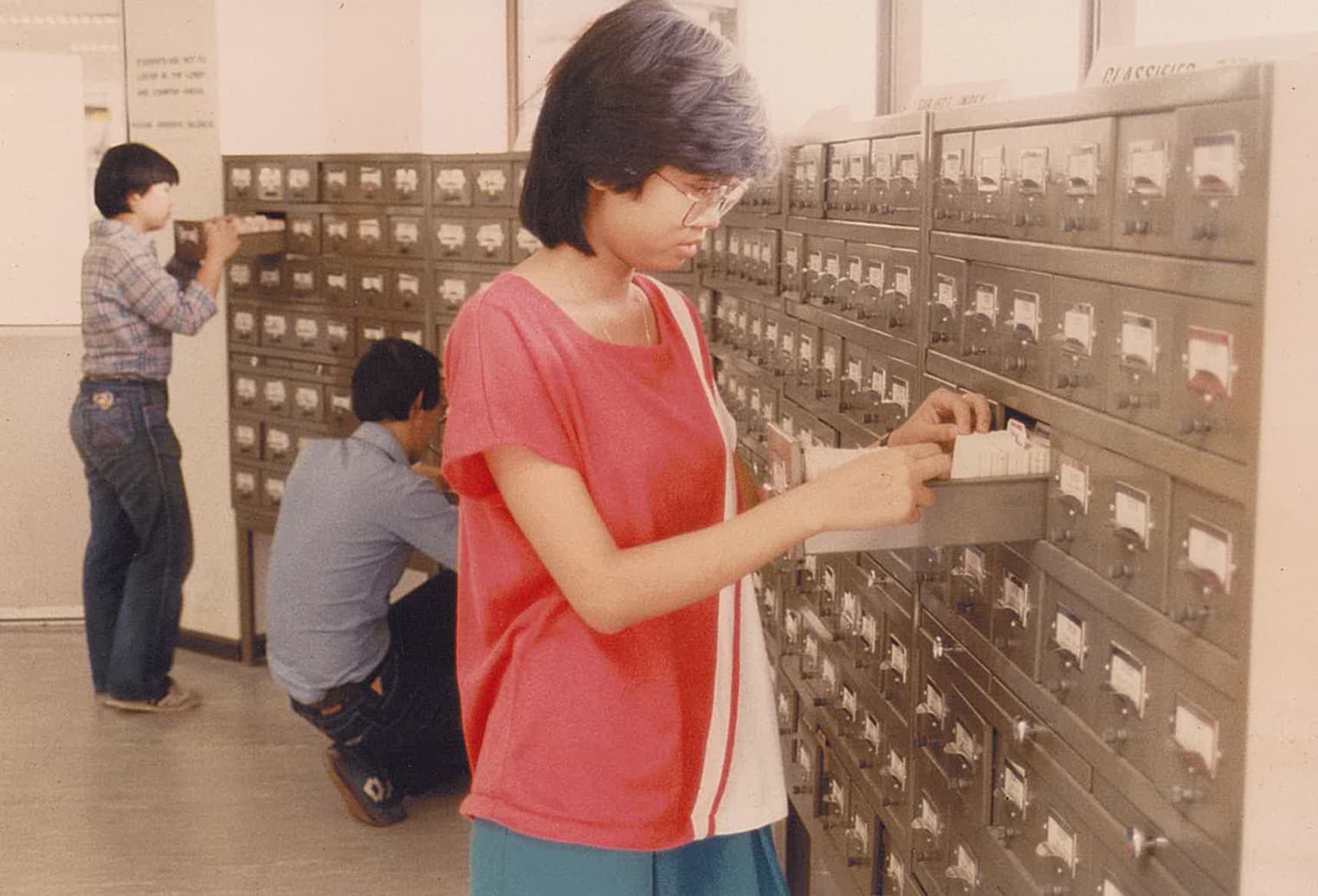
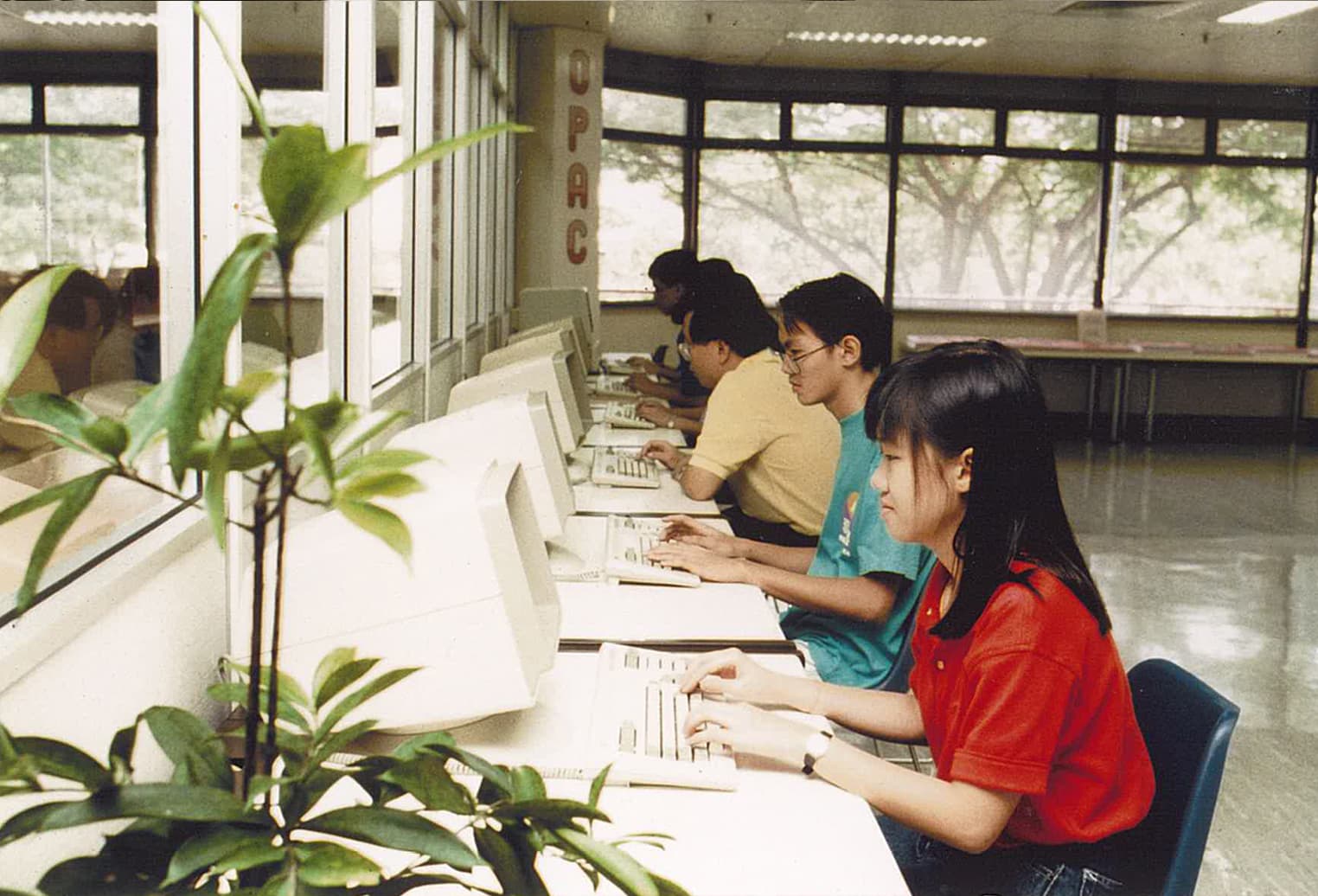
Ngee Ann Polytechnic Library became Singapore’s first fully computerised library, revolutionising productivity, user access, and national information sharing through real-time operations, OPAC terminals, and integration with the SILAS network.
The implementation of the Advanced Library Management System, in partnership with Sime Darby Systems and powered by the URICA software on a 32-bit Microdata Sequel 9000 super mini-computer, revolutionised NP Library’s operations through real-time online access, seamless automation, and enhanced user experience—cementing its position as a pioneer in library technology.
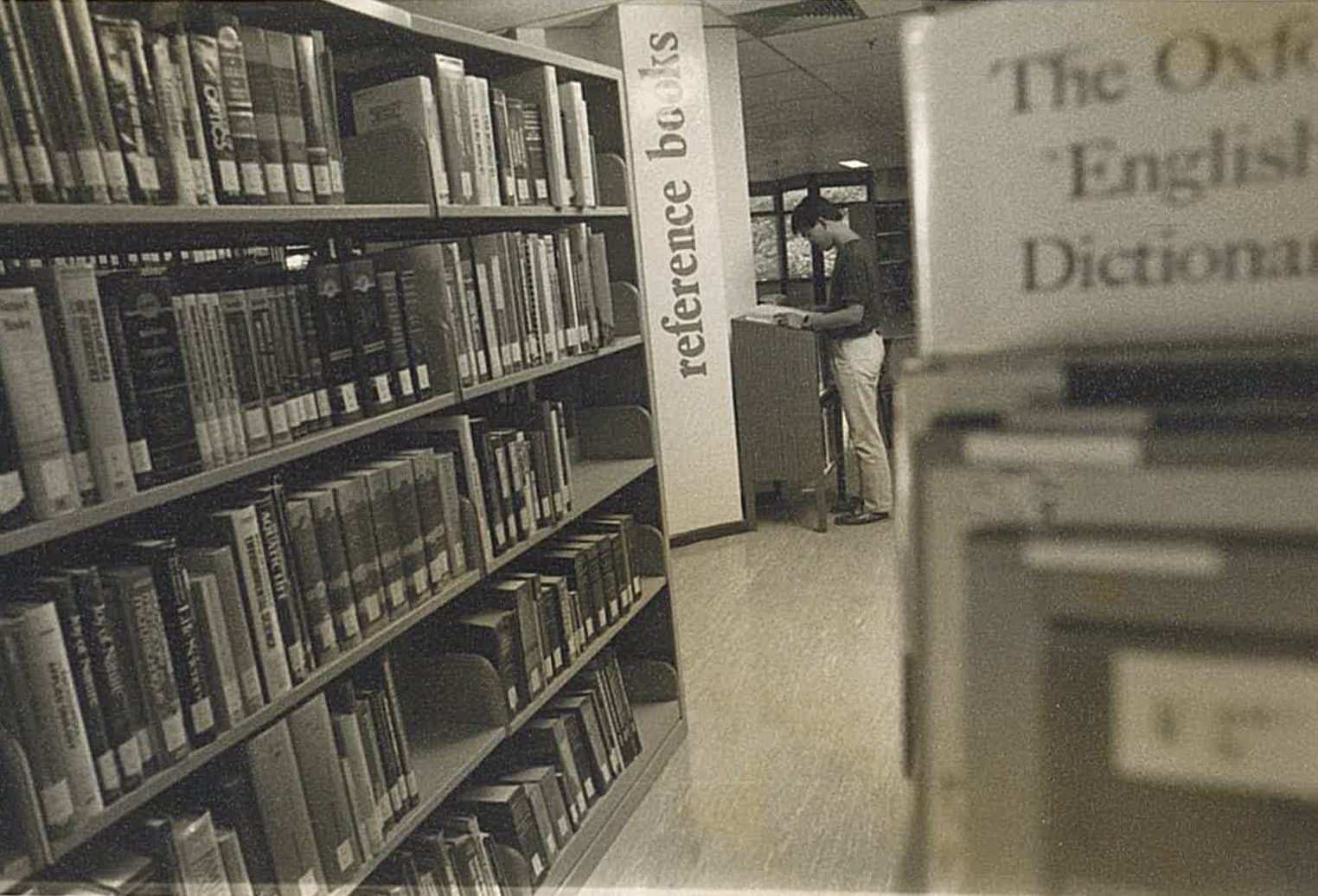
The Library occupies a central place on campus spread over 4 floors, from level 2 to 5. It has 74,000 volumes of books, 780 current periodical titles and some 24,000 items of audio visual materials.
A comprehensive information literacy programme that equips students and staff with essential research, resource, and information skills through structured orientations, guided tours, and targeted learning sessions, fostering academic success and lifelong learning.
The most notable publication produced by the Library is the NP Library Bulletin which alert users to the facilities and services offered by the library.
NP Library pioneered digital innovation as the first in Singapore and ASEAN to implement an in-house–developed Online Circulation Control System, streamlining library operations through barcode automation and establishing itself as a regional leader in library technology and efficiency.
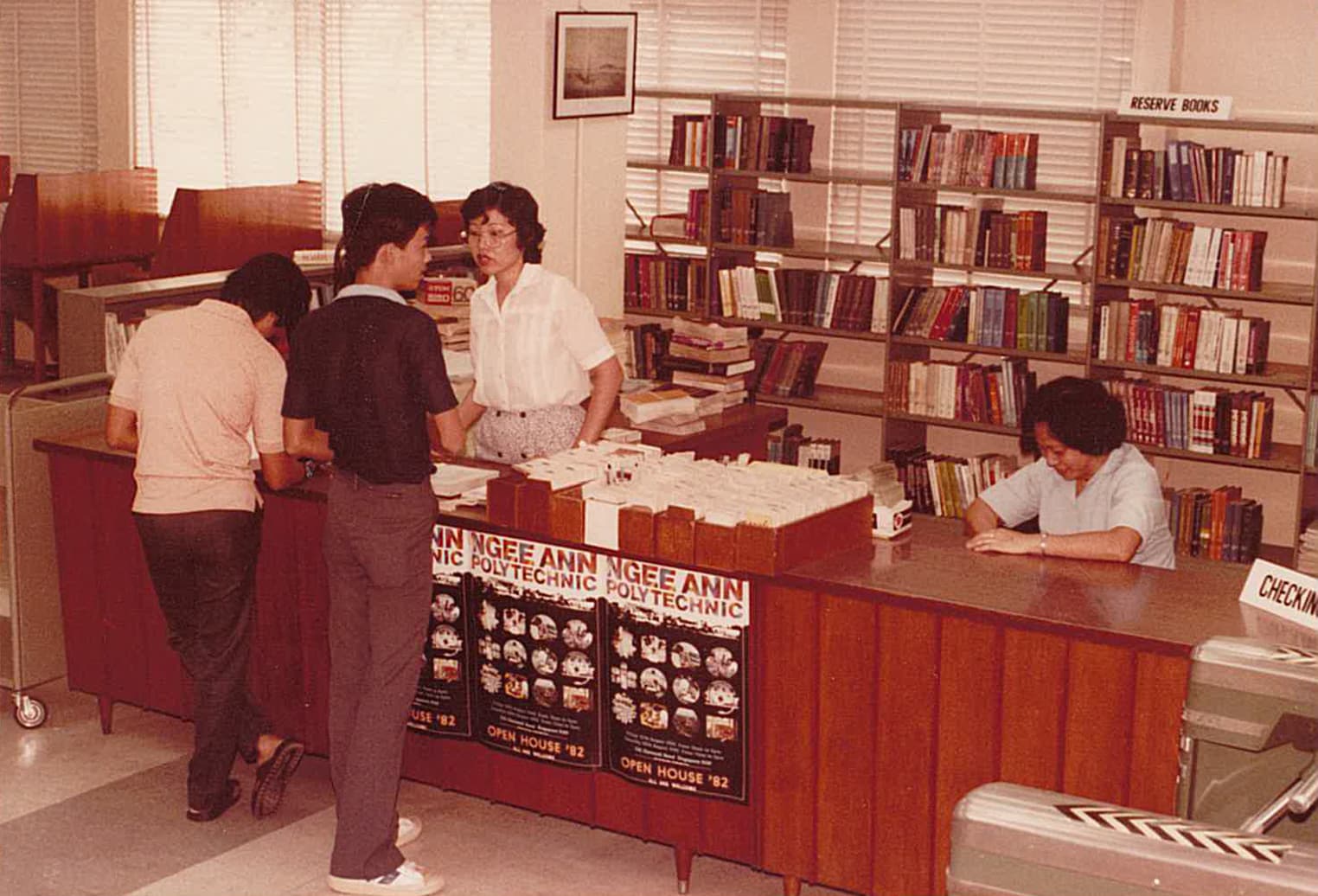
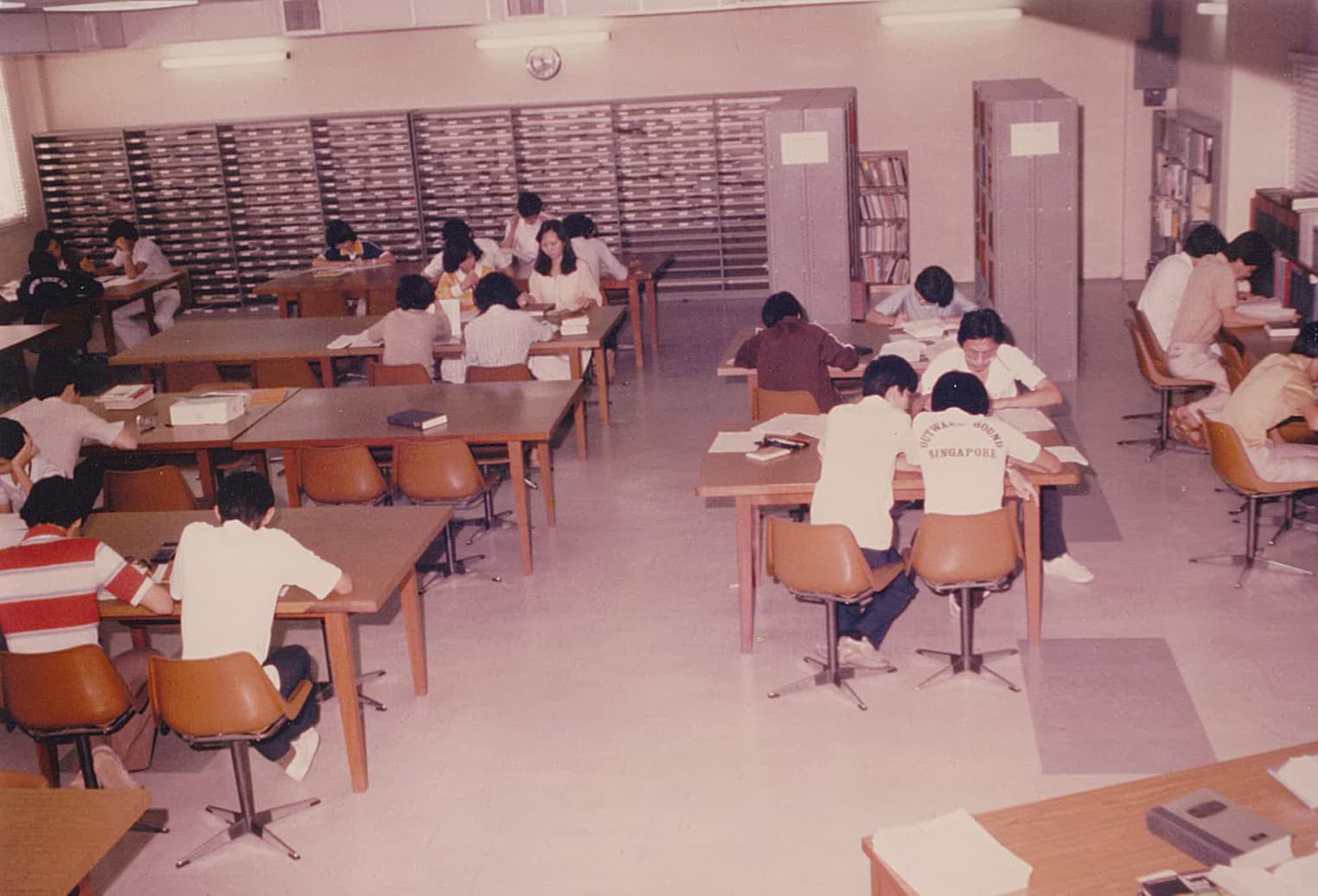
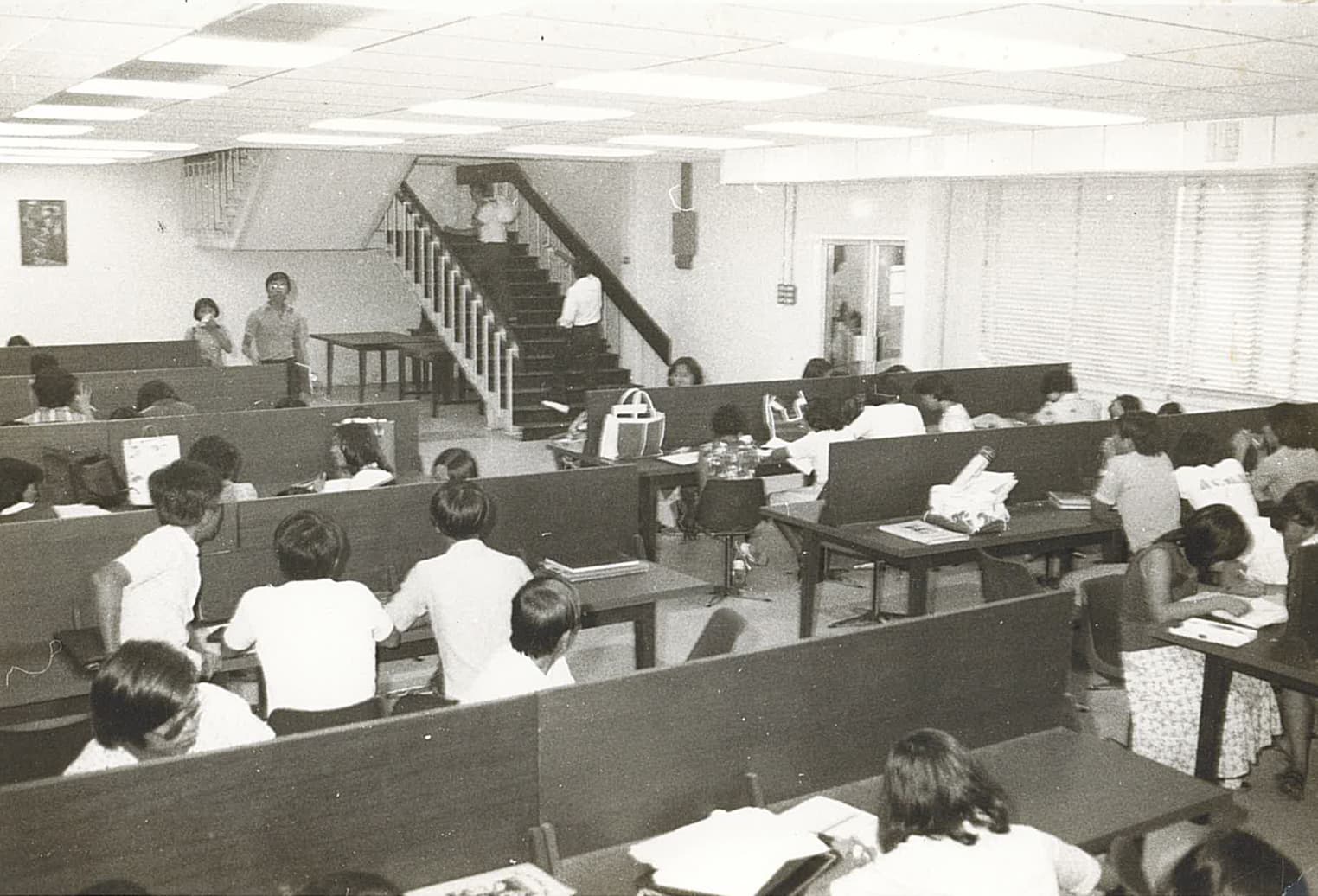
The 1983 major library expansion marked NP Library’s transformative move to a spacious four-level facility in the west wing of the main building, featuring 1,540 sq m of space, 530 seats, and an expanded collection of 52,000 books, 500 periodicals, and new audiovisual materials—signifying a quantum leap in capacity and services to support the growing academic community.
The new Library shifted to new premises in Oct 1983. It covers an area of 5,422 sqm with a seating capacity for 1,000.
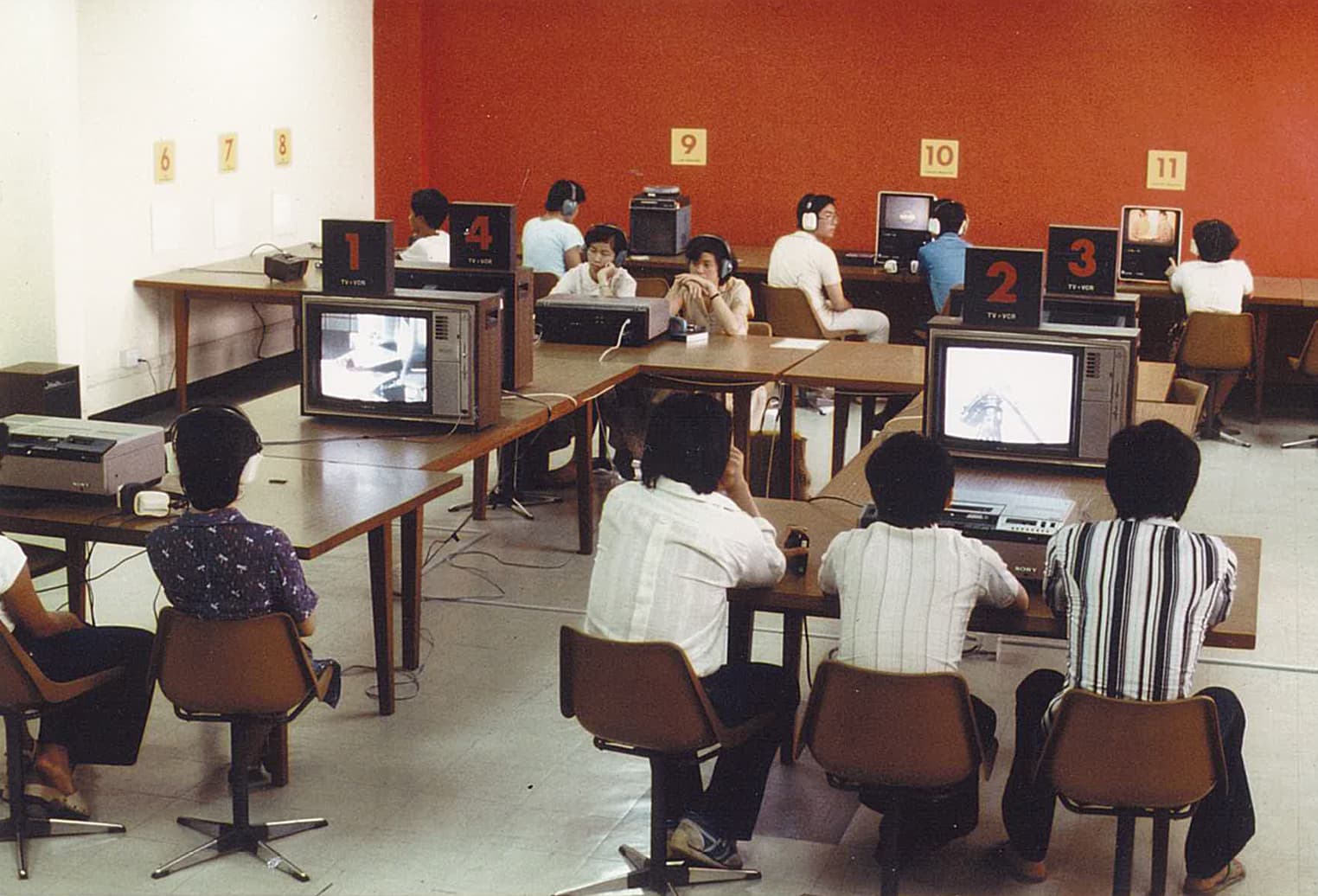
The library was renamed the Library Resources Centre (LRC) to reflect the growing diversity of media within its collection, while maintaining its core commitment to traditional library services.
NP Library was the first library to set-up an Audio Resource Centre.
Due to an increase in student enrolment and increase in collection size, the Library expanded in area to 1,541 sqm with seating capacity for 672.
The Library expanded to occupy 8,800 sq feet in its new premises. It a seating capacity of 310. There were 38,000 volumes of books and more than 400 periodicals.
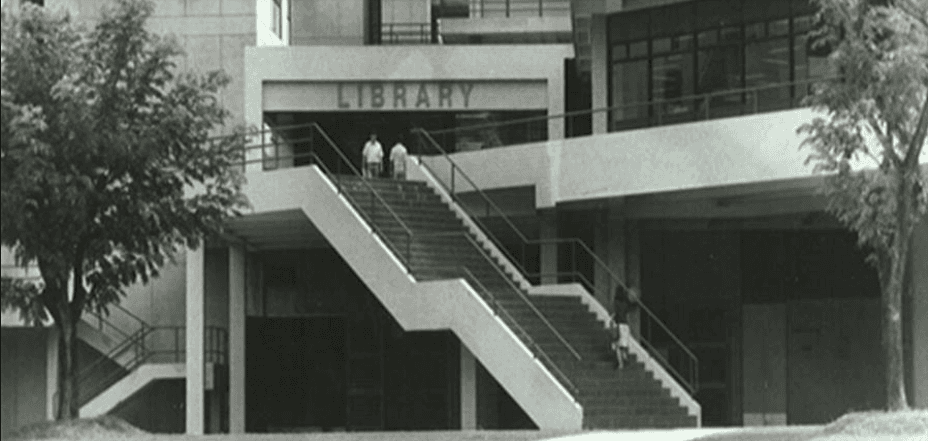
The Library’s relocation to Clementi Road in 1973 marked a pivotal step in NP’s institutional growth, introducing a modern, air-conditioned facility with expanded capacity and improved learning conditions that strengthened the college’s foundation for future library services.
The Library offers a comprehensive learning environment with diverse study spaces, extensive collections, and a well-organised access system that supports flexible learning and efficient information discovery for students and staff.
The Library’s collection grew to 17,128 volumes of Chinese books, 6,960 volumes of English books and 108 kinds of magazines in both languages.
The Ngee Ann College had 14,154 volumes of Chinese books, 3,512 volumes of English books and 87 kinds of magazines in both languages.
The library was located then on levels 3 & 4 of the college at the Teochew Building at 97 Tank Road from 1963 to 1968.
From its humble beginnings in a small room at the Ngee Ann Kongsi Building, Ngee Ann Library has evolved into a modern, multi-format information hub—demonstrating its enduring commitment to growth, innovation, and meeting the changing educational needs of the Ngee Ann community.